Encore
A Lagos marketplace that gives the outfit you wore once a second night.
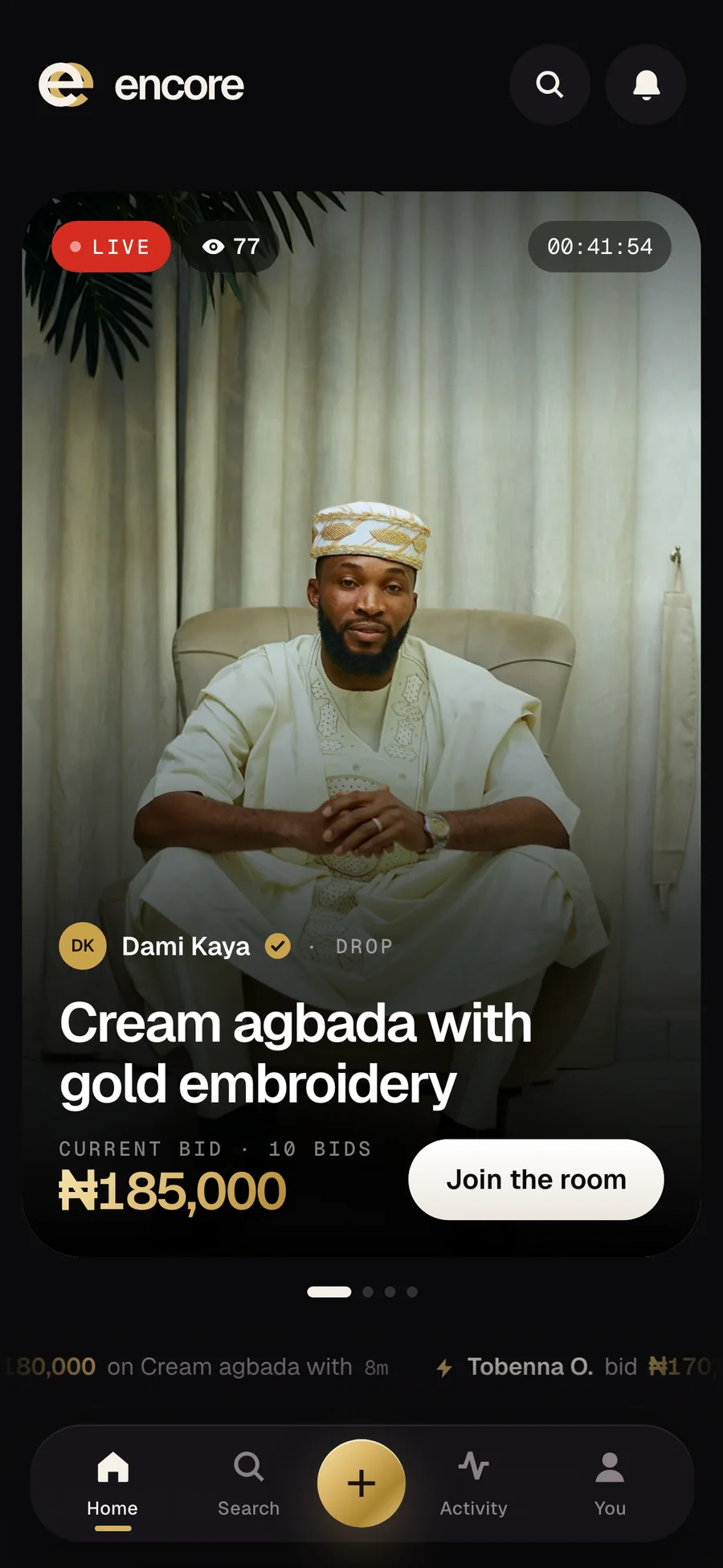
In Lagos, a great outfit usually gets one big night. Aso-ebi for a wedding, a gown for a gala, the agbada an artist wore on stage. Then it hangs in a wardrobe, losing value. Encore lets people sell those pieces at a fixed price or in a live auction, and holds the buyer’s money until the outfit arrives.
Encore’s commission, taken from the seller’s payout and shown before they list.
A flat buyer-protection fee, shown up front at checkout.
Where it launches, in naira through Paystack, so every delivery can be watched closely.
Confirm your role on Encore (brand, product design, prototype, film) and whether it’s your own venture or for a client.
Here’s the whole product in under a minute.
The launch plan runs on X, so I made a 57-second product film for the timeline. It follows one outfit from the wardrobe to a live auction, and ends with a fan winning it.
Read the film’s script
Most of us own an outfit we wore only once. It was perfect for one night. Since then, it has hung in the wardrobe, losing value. Encore gives it a second night. List it in minutes. Add photos, describe the piece and say where it was worn. Then tell its story. A piece with a past finds buyers faster. Set a fixed price, or let buyers compete for it in a live auction. Your auction goes live, and buyers across Lagos can join the room. Buyers watch the price move, follow the chat and bid in real time. A bid takes two taps, so nobody bids by accident. Set a maximum once. Encore bids for you, only as much as it takes to stay ahead. If someone outbids you, auto-bid answers. The highest bid wins. Encore holds the payment until the piece arrives. Soon, the artists, actors and personalities you follow will sell the outfits you remember. Their fans will bid for them, live, from anywhere in the country. One fan wins, and the piece begins its second life. Every outfit deserves an encore.
The name already explains the product.
An encore is a repeat performance, given because the audience asked for one more. That’s exactly what a second sale is.
The mark is an e and its gold echo: the first time a piece was worn, and the next. I tried a stage arch and a spotlight wordmark too, but only the echo still read clearly as a 29-point app icon.

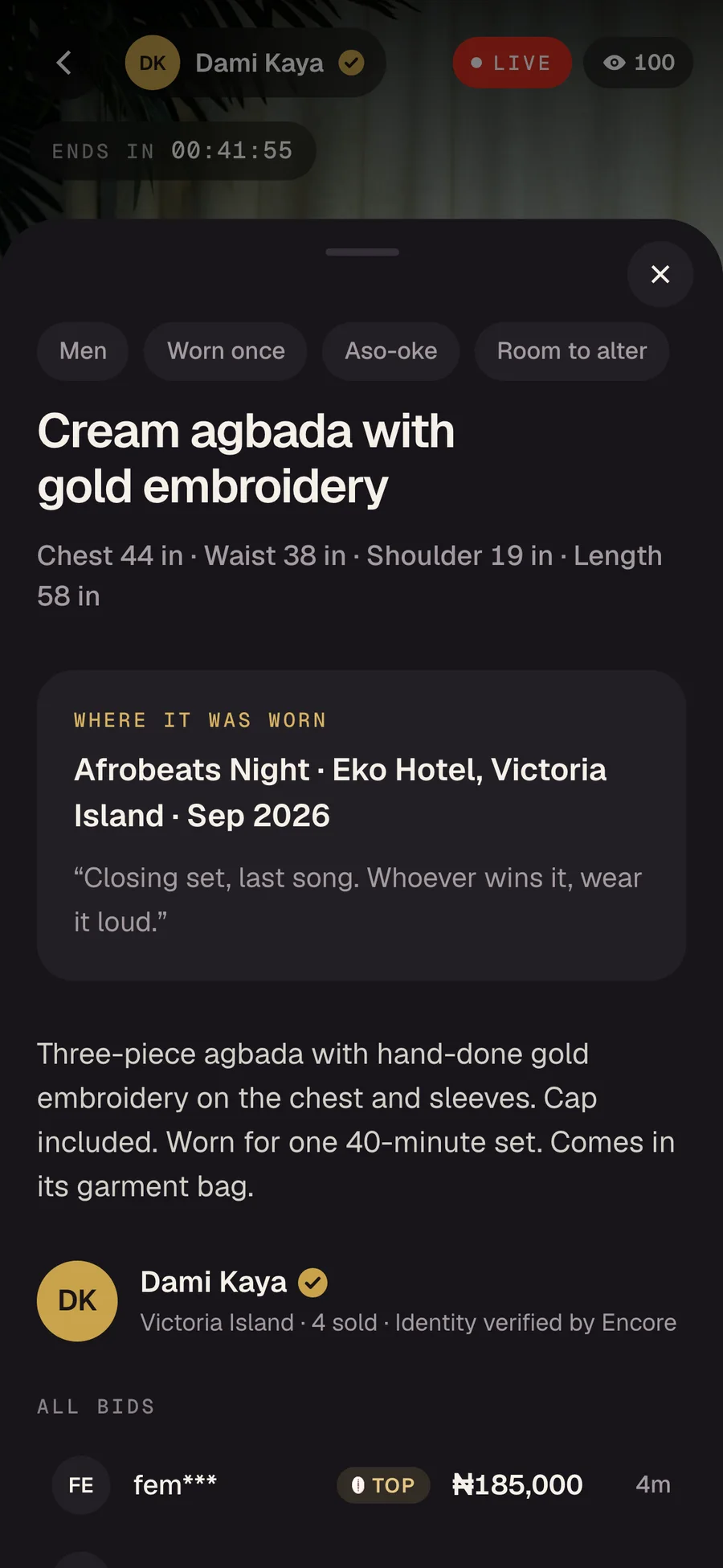
Auctions happen in a live room.
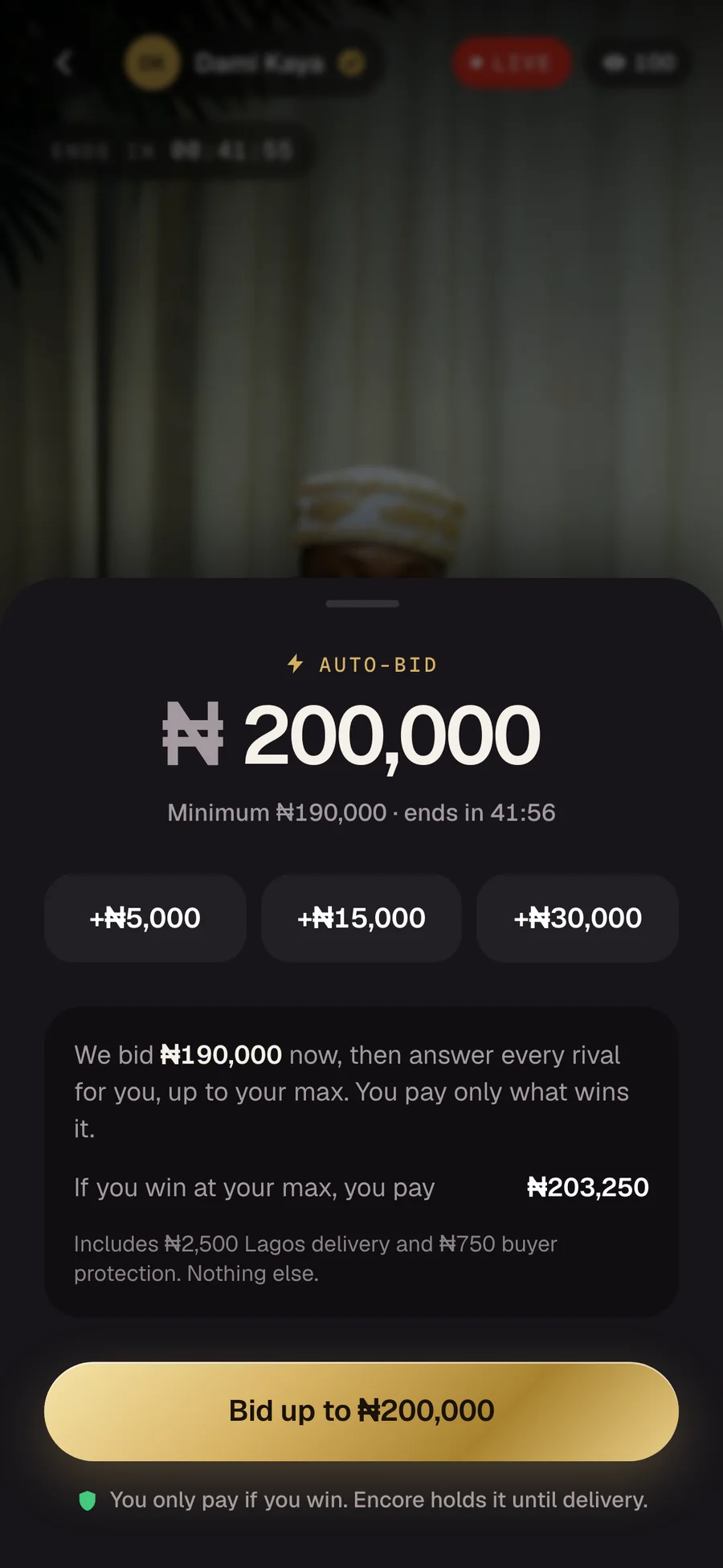
Sellers choose a fixed price, where the first buyer to pay takes it, or an auction that runs for one to seven days. Buyers join the room, watch the price move, follow the chat and bid in real time.
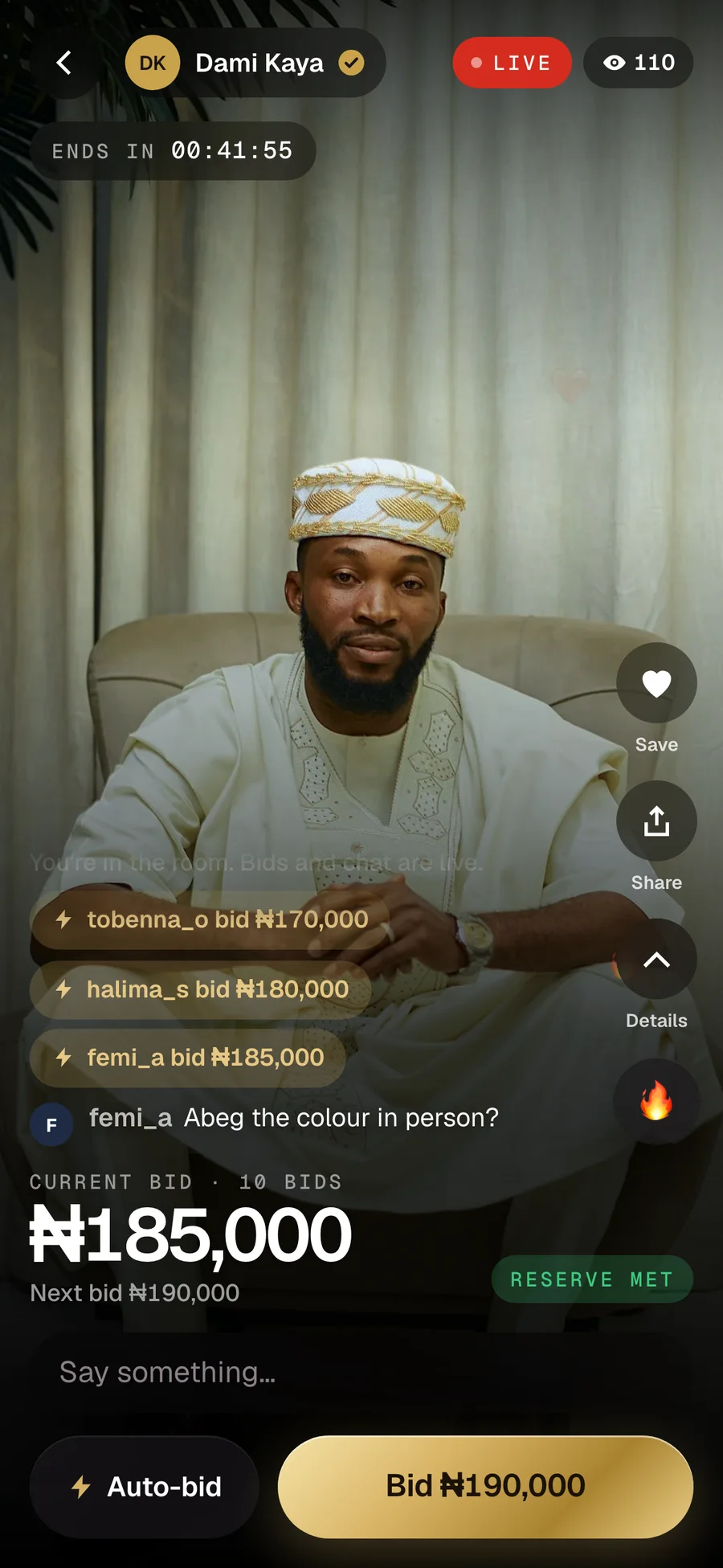
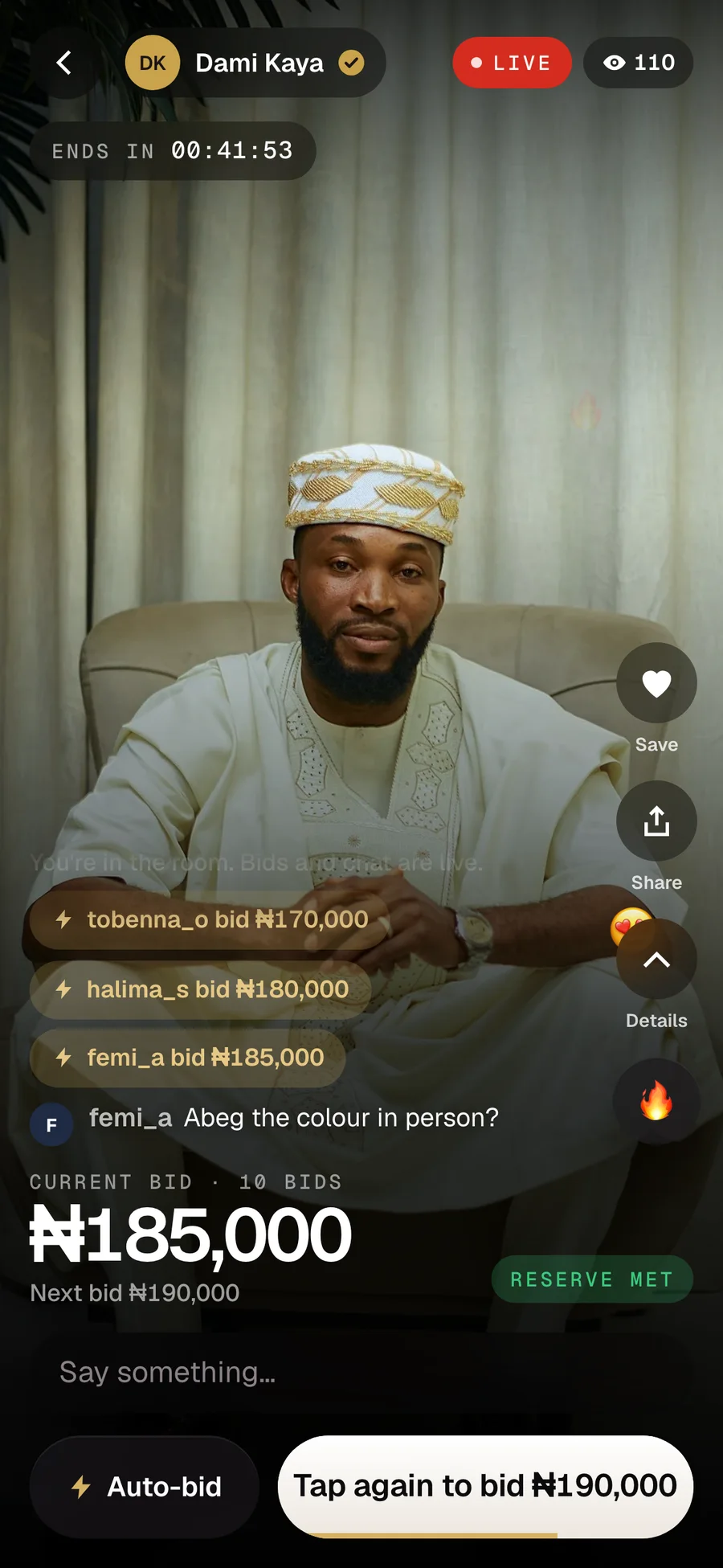
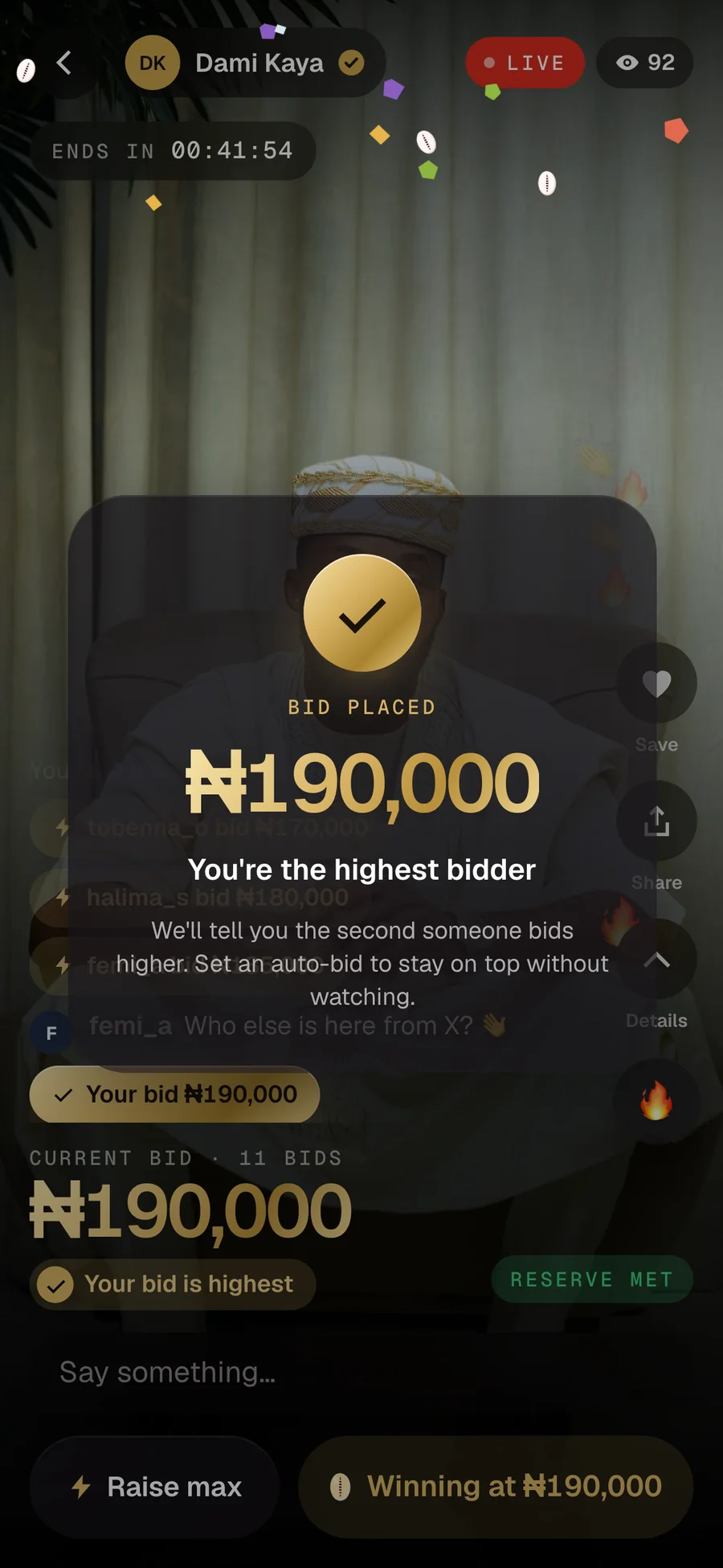
Set a maximum once, and Encore bids for you.
Auto-bid only spends as much as it takes to stay ahead, and the sheet shows exactly what you’d pay if you win at your maximum, delivery and protection included.
Most of these clothes were sewn for one body.
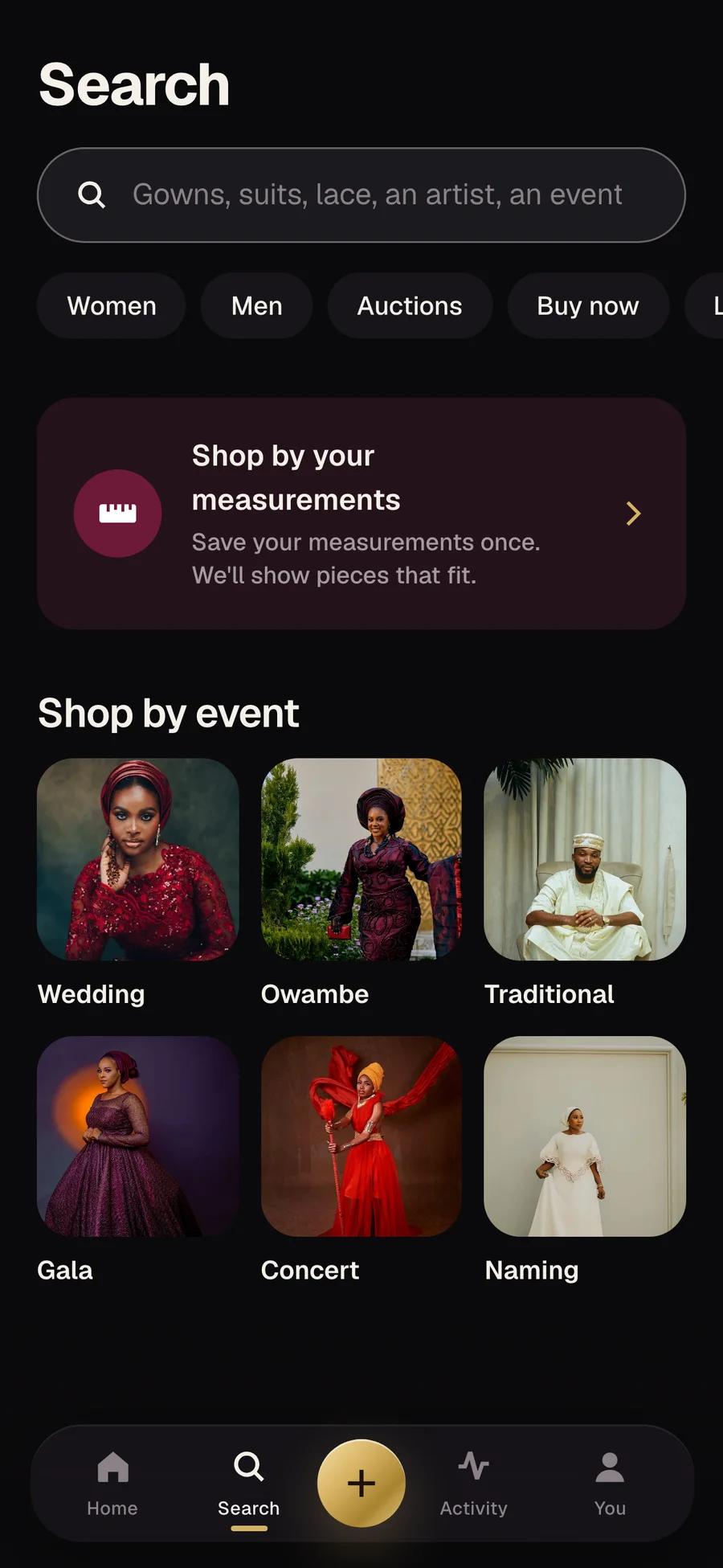
So S, M and L don’t mean much. Sellers measure the garment laid flat, in inches. Buyers save their own measurements once, and “Fits me” in Search shows pieces within an inch and a half.
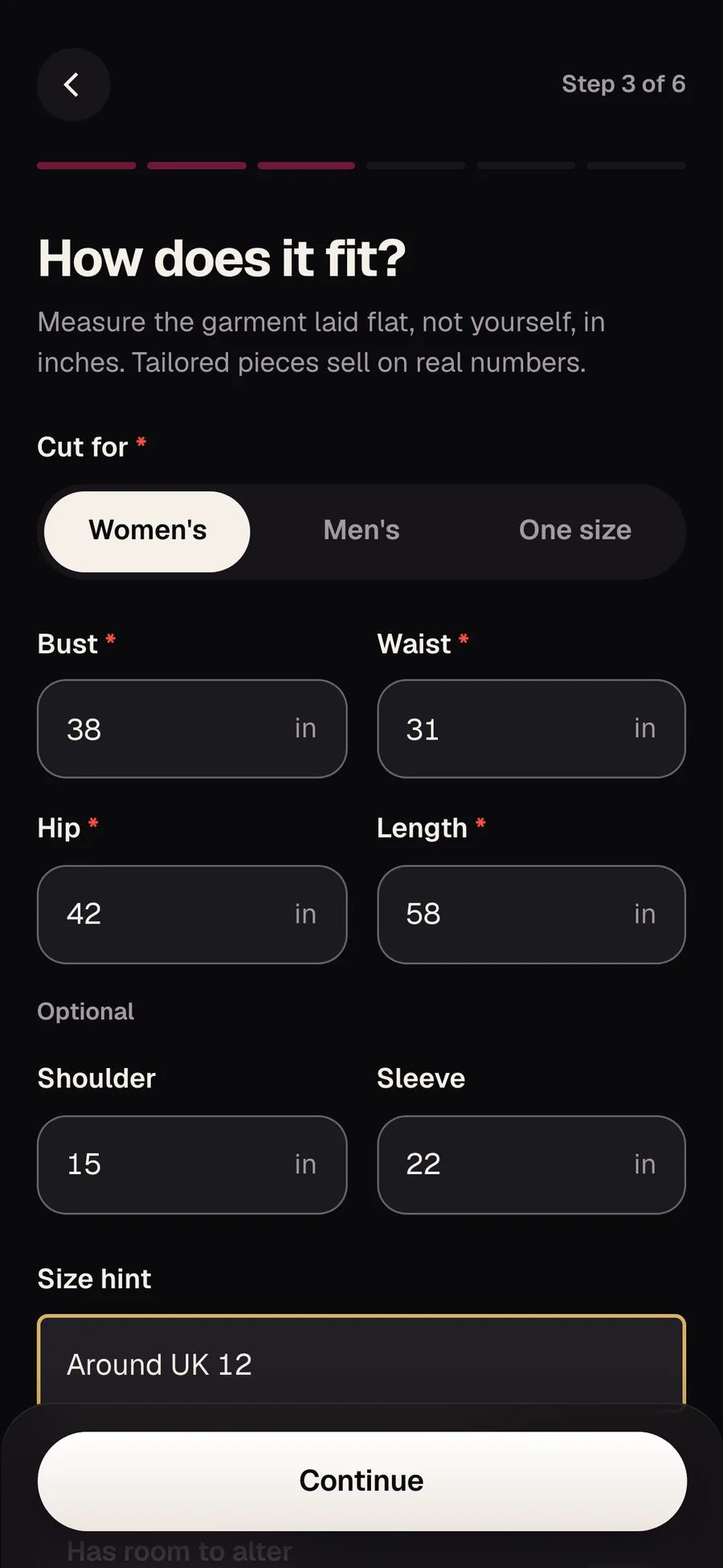
Listing takes six short steps, and the seller sees their payout first.
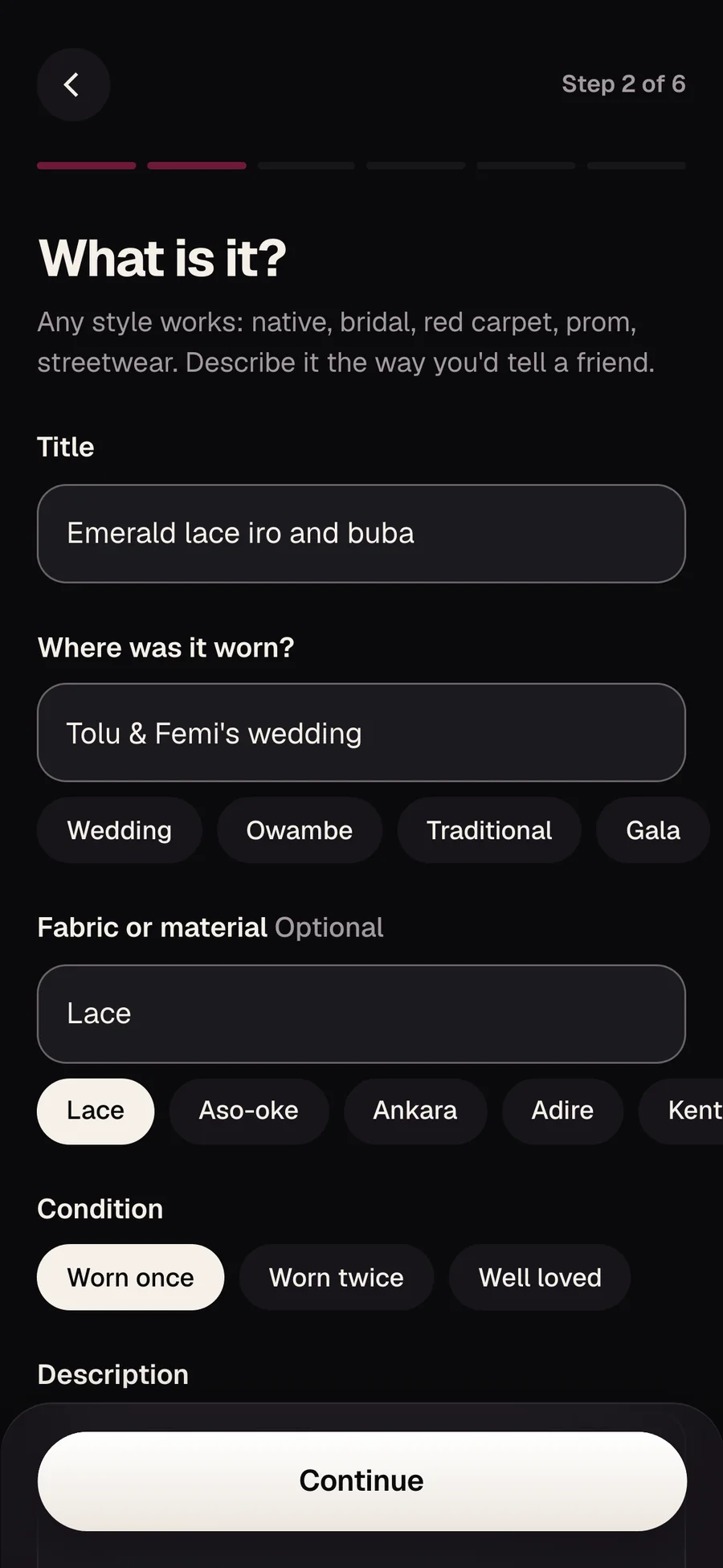
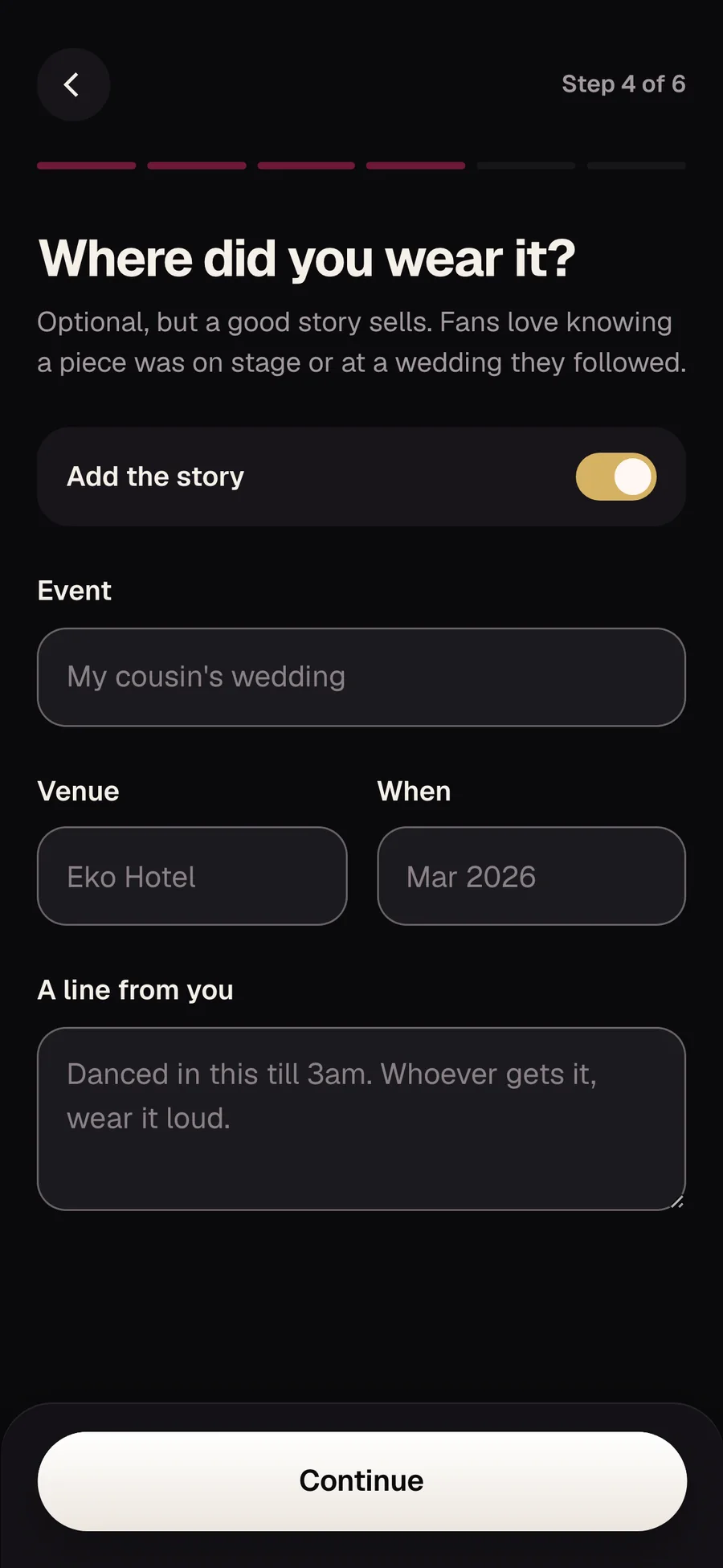
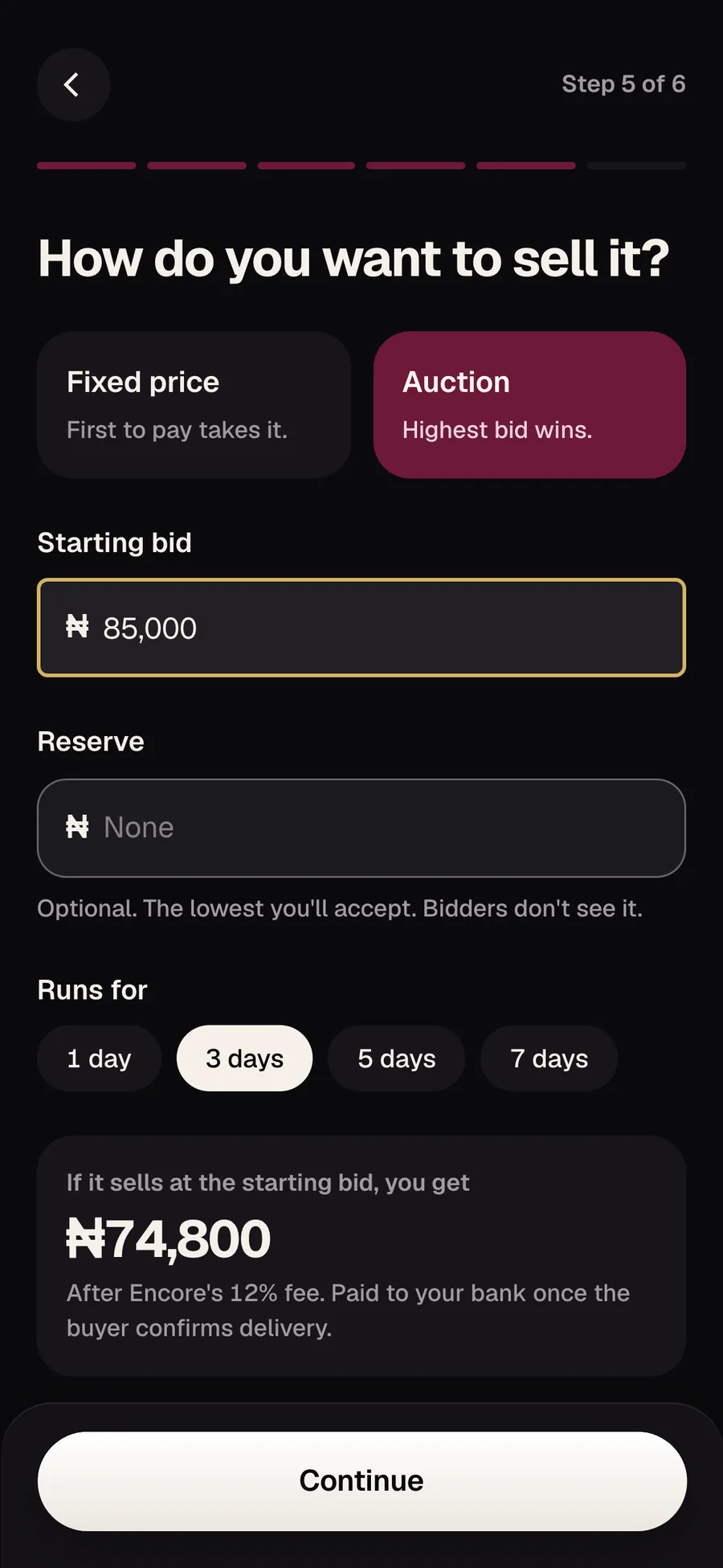
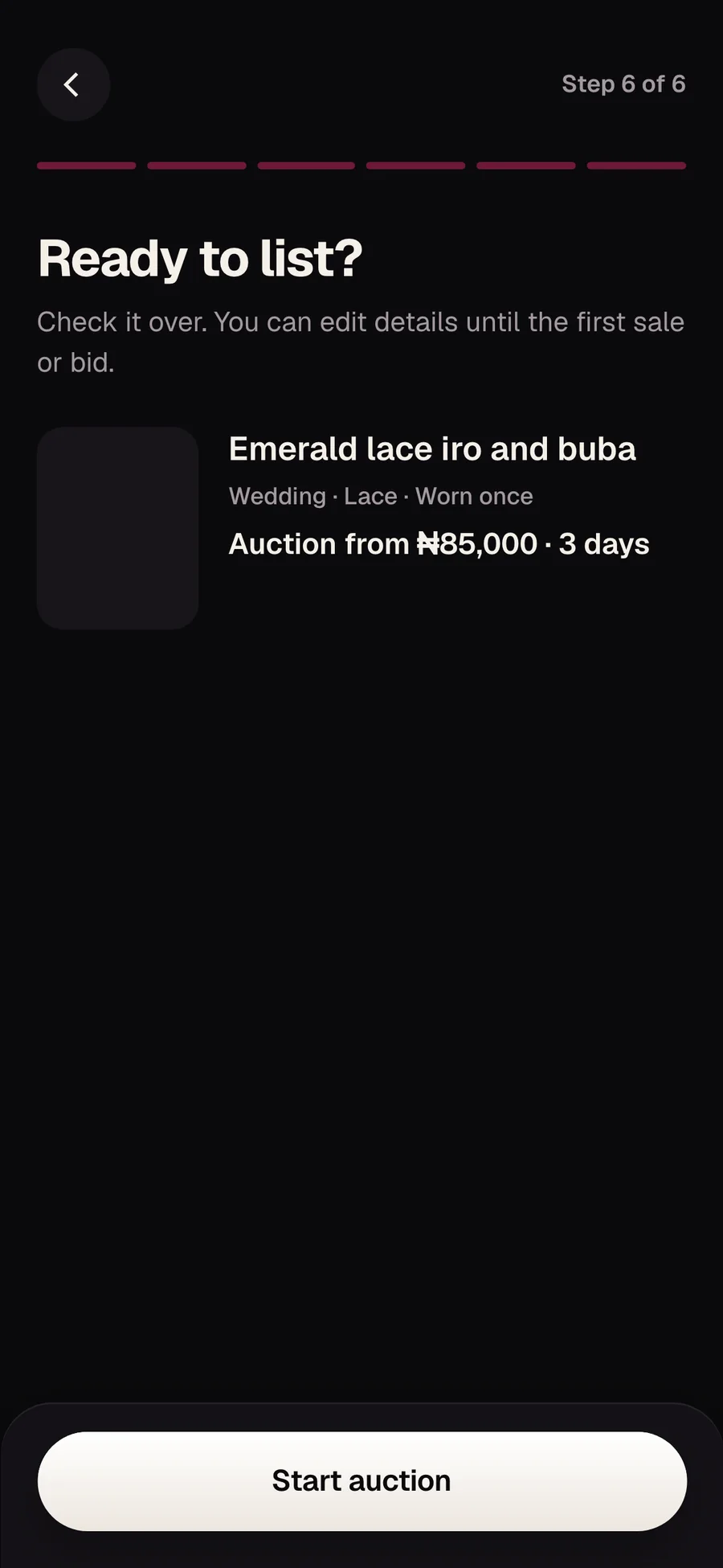
Start at ₦85,000 and the seller sees₦74,800before they list, after Encore’s 12%.
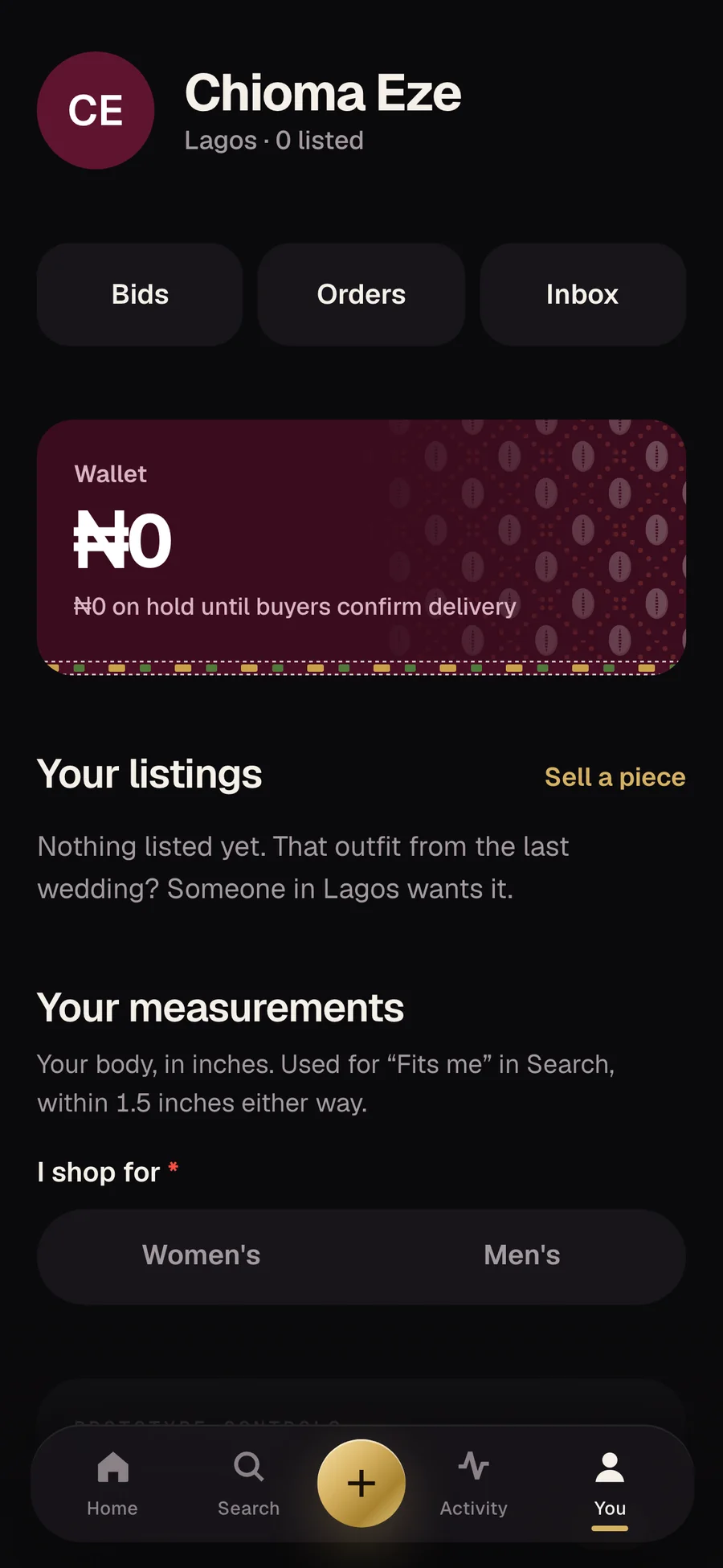
Paying a stranger for clothes needs a safety net.
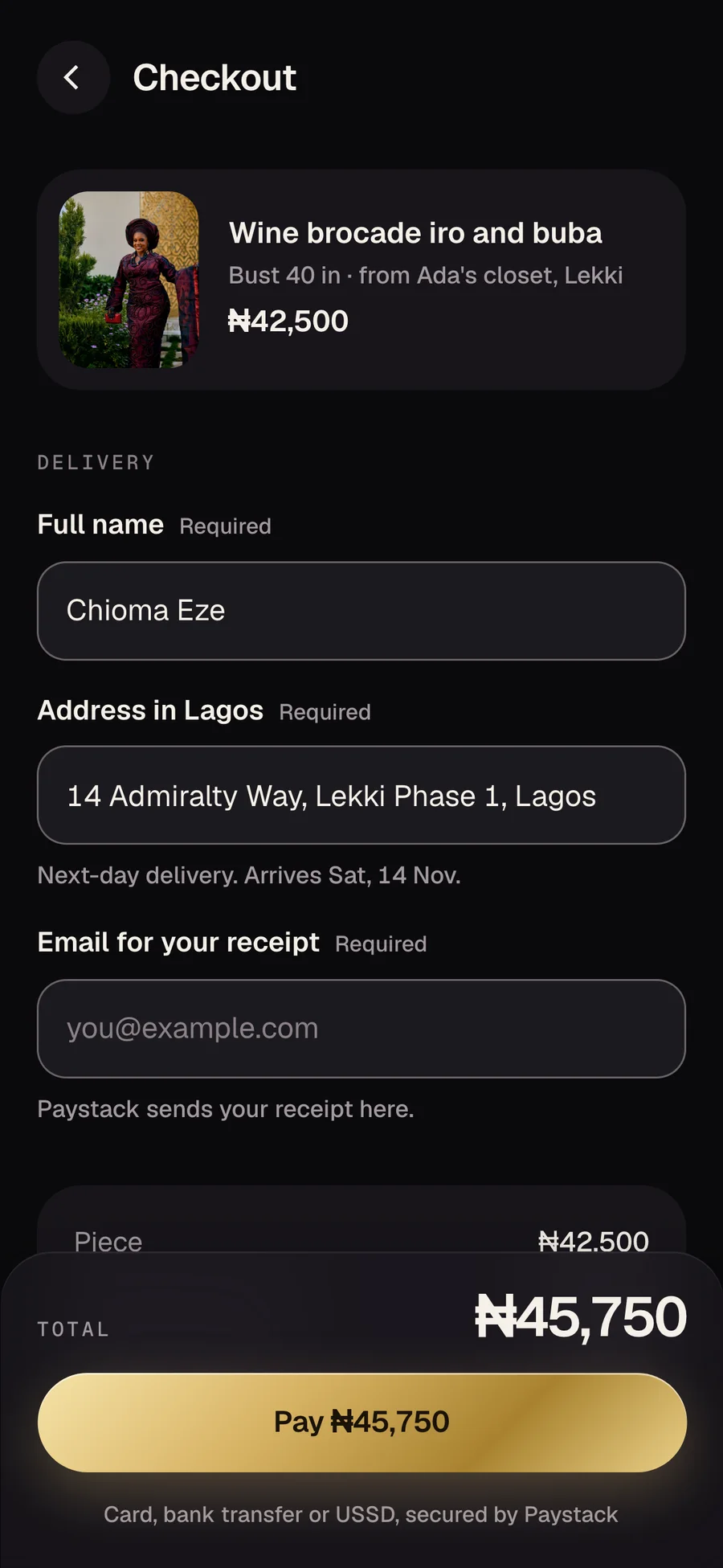
Encore holds the buyer’s payment and only releases it to the seller after delivery is confirmed.
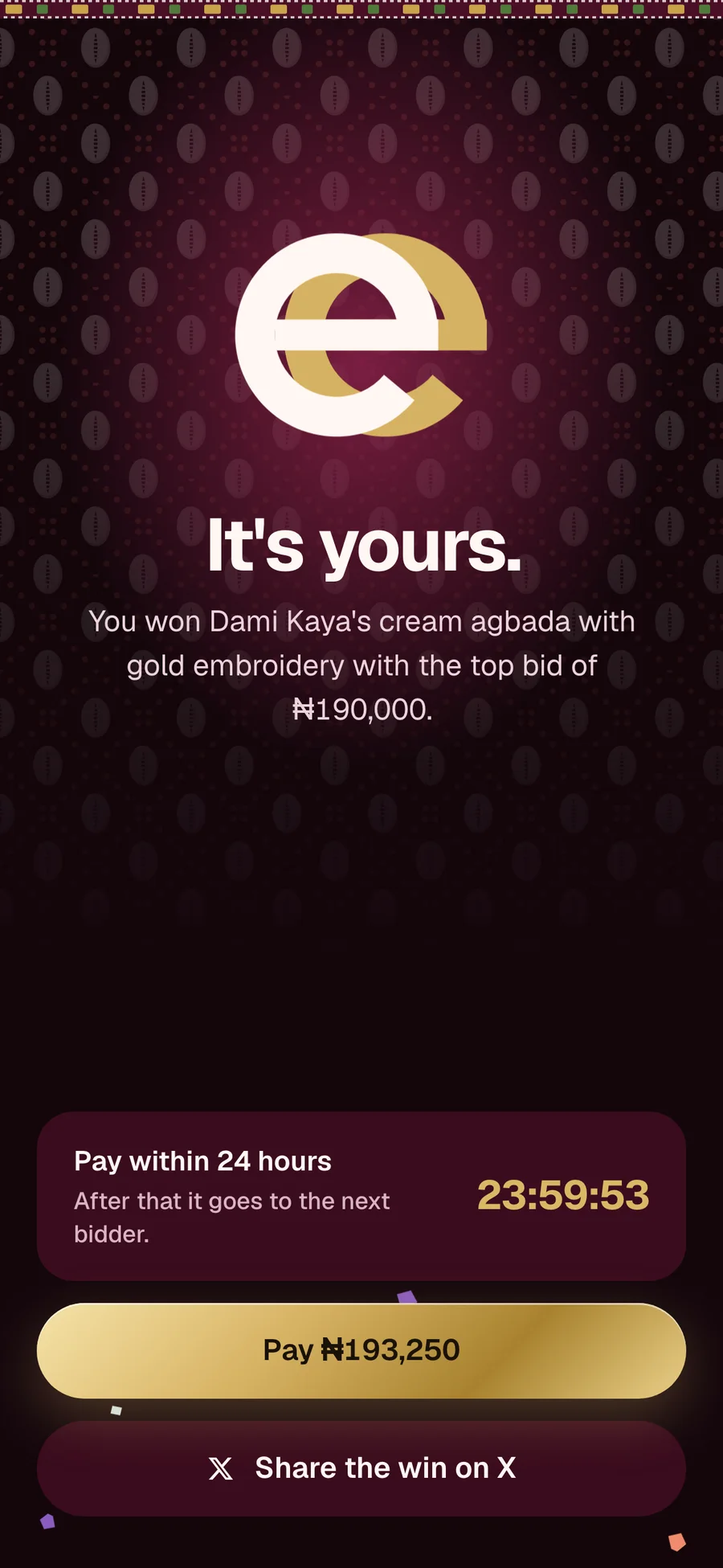
Auction winners pay within a day, or the piece goes to the runner-up.
Lagos delivery, shown with the ₦750 buyer protection before anyone pays.